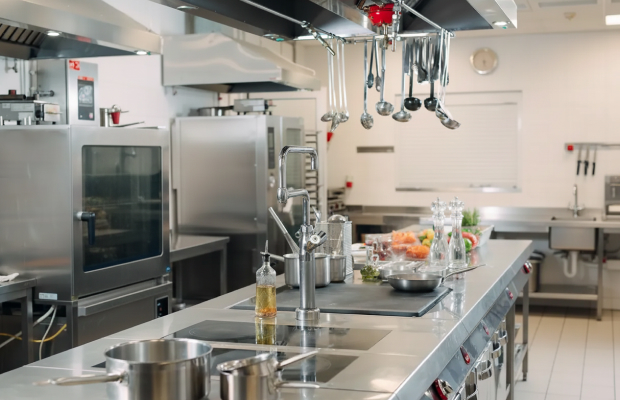
In commercial kitchens, workflow is the difference between controlled efficiency and constant bottlenecks. Poorly planned equipment placement, prep space, and movement patterns impact customers with longer wait times, inconsistent food quality, and faster staff burnout. These inefficiencies compound over the course of service, slowing output and increasing physical strain on your staff.
KaTom Restaurant Supply helps eliminate these problems by helping operators make smarter decisions before the first order is placed. Through equipment selection, layout guidance tailored to specific menus and volumes, and operational insight drawn from real-world experience, KaTom acts as a partner in designing kitchens that function efficiently. Instead of retrofitting solutions after problems arise, KaTom helps operators design workflows that support productivity, quality, and long-term staff sustainability from the beginning.
Key Takeaways
- Kitchen workflows affect speed, labor, and consistency
- Efficient kitchen design reduces bottlenecks
- Proper equipment placement speeds up service
- KaTom helps operators organize kitchens for optimal workflow
Why Is Workflow Important in the Kitchen?
An efficient commercial kitchen is organized around task order rather than simply filling available space. When layouts are built around how the food moves, storage areas feed into prep stations, prep flows directly into the cooking line, and finished items transition seamlessly to holding or service.
Designing an Efficient Prep Area
Every station relies on ingredients being ready on time, so the prep area sets the pace for the entire kitchen. Far-apart tools, ingredients, and work surfaces create unnecessary steps and interruptions, causing cooks to lose momentum. A well-organized prep area maintains consistent output and prevents slowdowns.
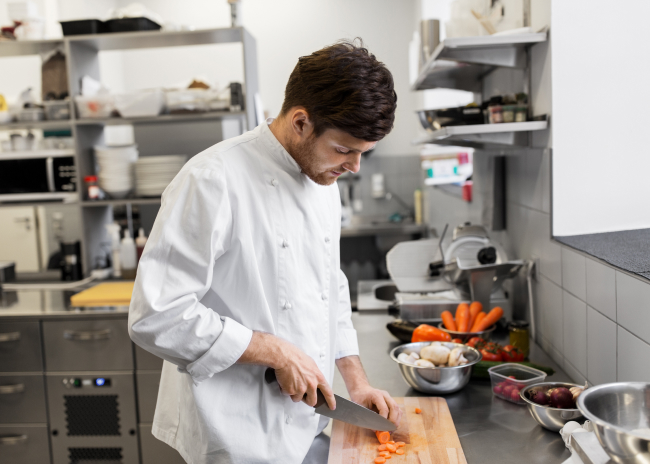 A well-organized prep area keeps ingredients, tools, and work surfaces within reach, allowing staff to work efficiently and keep the entire kitchen on pace.
Cooking Area Layout That Supports Speed
The cooking area should be organized according to the order in which menu items are executed, not around individual pieces of equipment. Clear paths between stations reduce congestion, while thoughtful spacing minimizes the need for cooks to cross behind one another with hot items. Placing equipment based on cooking sequence keeps movements predictable, shortens ticket times, and helps the line operate smoothly at all times.
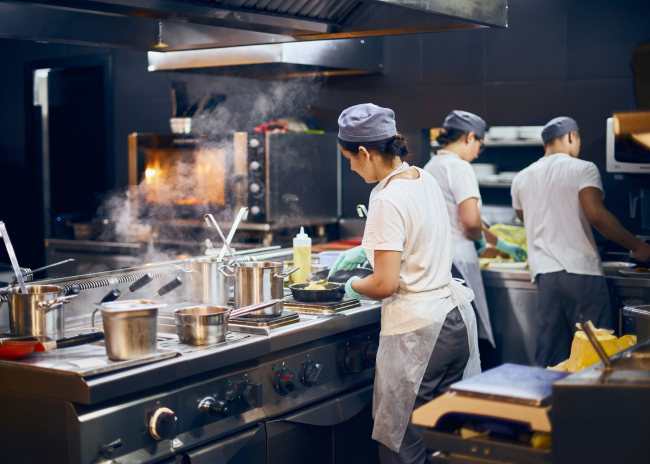 Cooking stations arranged in menu order reduce crossing paths, support consistent execution, and keep service moving smoothly.
Organizing the Cleaning and Warewashing Area
When dirty dishes and clean items take too long to return to service, workflow quickly breaks down. Undersized or poorly laid out dish areas create backups that can spill into prep and cooking zones. An efficient dish operation follows a single-direction flow, moving items from dirty to drop-off to washing, then to drying and clean storage.
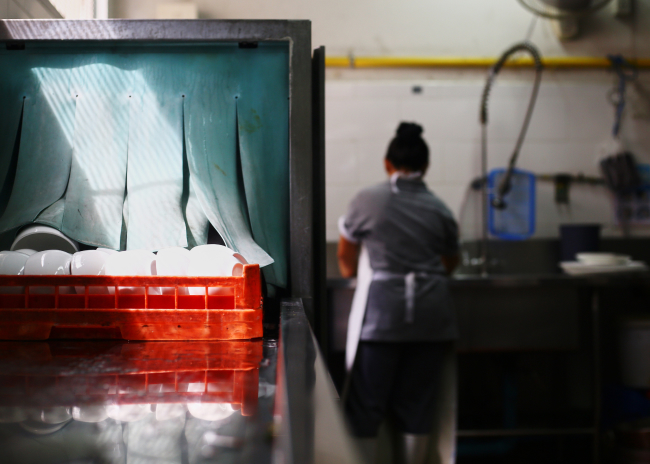 Single-direction dish flow keeps dirty items moving out and clean equipment returning to service quickly.
Kitchen Equipment That Improves Workflow
Equipment selection and placement directly affect how quickly and smoothly a kitchen operates. Thoughtful selection and positioning keep work areas organized, support a steady work pace, and help kitchens maintain consistency without overworking staff.
Recommended equipment:
- Prep tables with built-in storage keep ingredients and tools close at hand
- Undercounter refrigeration accelerates prep by storing cold ingredients at the workstation
- Reach-in refrigeration placed near prep zones reduces trips to walk-ins
- Griddles, fryers, and ranges grouped by menu limit unnecessary steps when cooking
- Properly sized cooking equipment ensures staff can meet demand during peak hours
- Dishwashers and sink setups arranged for one-direction flow prevent delays
Workflow Considerations for Small vs. High-Volume Kitchens
Priorities shift based on customer volume and available staffing. In smaller kitchens with limited staff, efficiency depends on multiple tasks being handled within a tight footprint. High-volume operations utilize clearly defined stations, wider aisles, and dedicated equipment to prevent bottlenecks.
Kitchen Efficiency Tips
- Arrange equipment in task order so food continuously progresses
- Keep frequently used tools and ingredients close at hand
- Group equipment by menu function
- Size prep tables and storage to match volume
- Design work areas to handle peak volume
- Regularly review workflow
Common Kitchen Workflow Mistakes to Avoid
- Placing equipment based solely on where it fits
- Placing prep too far from cold storage
- Letting warewashing intersect with prep areas
Choose KaTom for Equipment That Supports Kitchen Workflow
Operators turn to KaTom to help ensure equipment decisions align with real kitchen workflows. Through layout planning, equipment sizing guidance, and insight into kitchen organization, KaTom helps operators make selections that match actual service demands, resulting in kitchens that function efficiently with equipment that supports, not hinders, workflow.